Sicily’s Grapes & Wines

White and Red wines and grapes of Sicily

Grapes

Grillo
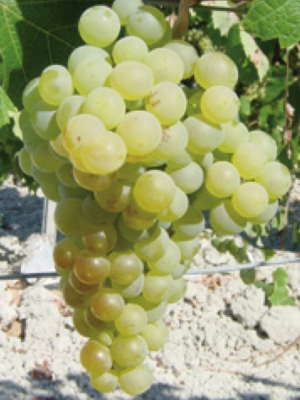
Grillo This grape is a daughter of Muscat. Its grapey aroma and flavor is milder than in Muscat.

Its major virtue in the vineyard is that it can withstand really high temperatures and drought and still produce copiously.
It also tends to have quite high alcohol contents which makes it a prime candidate for being left on the vine long enough to produce sweet dessert wines (which is why Marsala is classically made from Grillo). Grown as a dry table wine, it needs considerable caution to make anything that isn’t bland and nearly tasteless; thus, care is needed in selecting particular bottling if disappointment is to be avoided. Grillo is not a strongly aromatic or flavored wine, but at its best it is full-bodied, earthy almost to the point of astringency, and can be bottle-aged to benefit. It will have a creamy feel (though with some acidity), and a sense of faint and indistinct but broad-spectrum fruit flavors, tending toward the citrus-y.
Grillo was used in one of Julius Caesar’s favorite wines, the Mamertino of Messina.
Credit to: https://thatusefulwinesite.com/varietals/whites/Grillo.php

Grillo Presentation Slide     How do you say Grillo?

Zibibbo
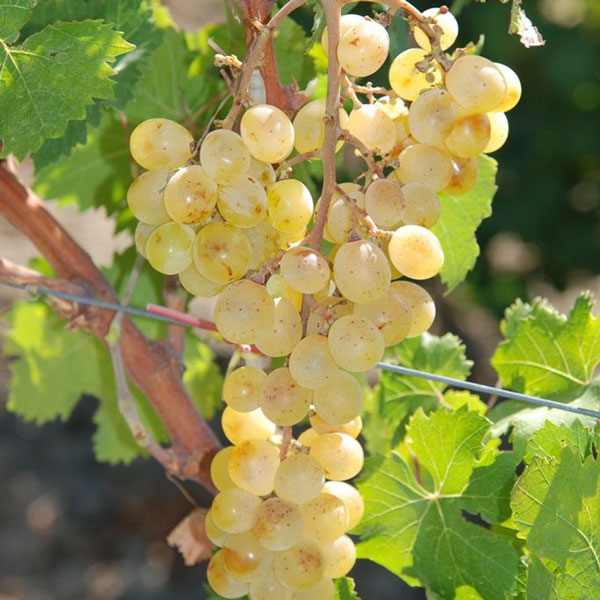
Muscat of Alexandria (“Zibibbo”) This is an ancient grape variety grown in the Mediterranean for thousands of years.

It was brought to Sicily by the Phoenicians over 2500 years ago. The grape is sweet and highly aromatic. It has large berries and can used as a table grape or dried for raisins. Muslims are supposed to abstain from alcohol. Wine grapes were eliminated under Muslim rule. It is said, growing Muscat was permitted because they were being grown for raisins not wine. This enabled it to survive the Arab domination of Sicily. The Arab word for raisin is Z’bib, and in Sicily Muscat is called Zibibbo.
Since it is a very old grape, it has mutated many times producing clones and it has naturally crossed with many other grape varieties. By some counts there are up to 200 grape varieties and its offspring, most not used for commercial production.

Of the commercially important varieties there are at least 5 major clones- Muscat blanc à Petits Grains, Muscat of Alexandria, Muscat of Scanzorosciate, Muscat of Hamburg and Muscat Ottonel. And at least 12 offsprings- Riesling, Gewurztraminer, Traminer, Sylvaner, Muller-Thurgau, Albarino, Torrontes, Viognier, Traminette, Rkatsiteli, Cserszegi Fűszeres and Grillo.
All have a pronounced aroma of grapes, citrus and flowers. These aromas are produced by the terpene class of compounds. In Sicily alone there are two sub clones of Muscat of Alexandria. They have noticeably different growth patterns and concentrations of the aroma compounds.
The Muscat grape is unusual in that it produces a wine which retains much of the flavor of the grape. Most Muscat wines are produced as sweet wines. There are a few dry versions. Some of the better ones are from Alsace, Hungary, and Northern Italy. The flavor profile is aromatic with light notes of peach, kiwi fruit, ginger, honey, and lychee.


Zibibbo Presentation Slide     How do you say Zibibbo?

Nero d’Avola
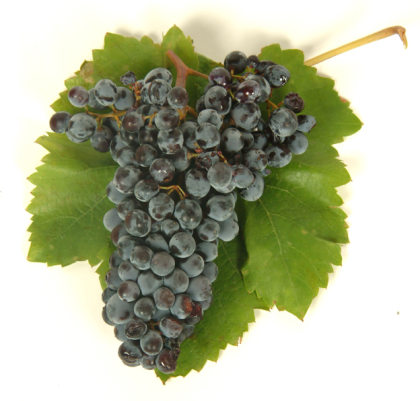
Nero d’Avola is the most widely planted grape in Sicily.

The name means black grape from the village Avola. When you think of Sicilian wines, the one that comes to mind is “Nero d’Avola” usually made with 100% of the grape of the same name. In Sicily the grape has three variations and all are full bodied with medium tannins and acid.

Nero D’Avola Presentation Slide     How do you say Nero d’Avola?

Frappoto
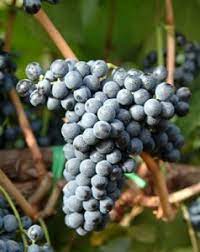
Frapatto makes a very fragrant, light colored wine with thin body.

This is another variety that DNA studies show has Sangiovese for one of its parents. Frappato has low soft tannins with medium acidity. The grape in Sicily has two variations. One is lighter with aromatics of roses, violets, strawberry. The other has black fruit, wild berries, black cherry, white flowers, light anise, and light thyme.

Frappoto Presentation Slide     How do you say Frappato?

Wines of Mt Etna

Etna Bianco
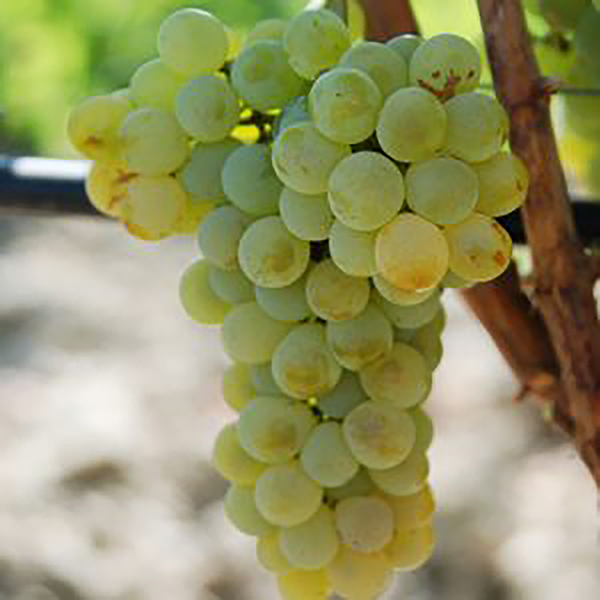
Carricante and Catarratto are the grapes in Etna Bianco wines grown in high elevation Mt Etna vineyards.

Mt Etna has relatively low temperatures at these higher elevations and some places it actually snows. (Yes, snow in Sicily!) Grapes grown at high altitude retain higher acid than when grown in lower warmer areas. Most “Etna Bianco” wines are blends containing predominately Carricante. The “Etna Bianco” in the NTP 2022 is composed of 100% Carricante and provides a full expression of the grape. Its flavors are soft, mineral, peach, apple, lemon, white flowers, light anise, and light thyme.

Carracante Presentation Slide     How do you say Carricante and Catarratto?

Etna Rosso
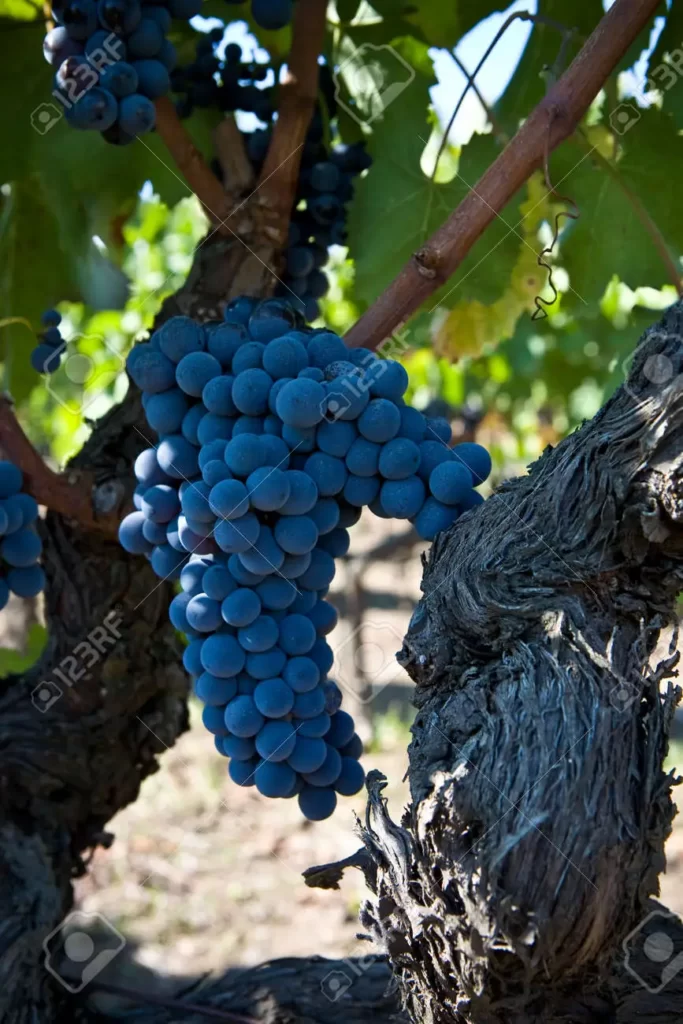
Etna Rosso is frequently a blend of Nerello Mascalese (min. 80%) and Nerello Cappuccio(max 20%). Nerello Mascalese means little black grape from the Mascali area.

It has low tannin, light body, medium color, noticeable minerality, bright red fruit and aromas of spice including anise. A DNA study showed that Sangiovese is one of its parents. The wine is Passorosso from the producer Passopisciaro. (Say that rapidly three times!)

Nerello Mascalese Presentation Slide     How do you say Nerello Mascalese Nerello Cappuccio?


Cerasuolo di Vittoria (DOCG)

Cerasuolo di Vittoria (DOCG) is a blend. Nero d’Avola (50-70%); Frapatto (30-50%).
Cerasuolo has the root “Cerasa” which means “Cherry” in Sicilian. “Vittoria” refers to the name of the village where it is grown. The unusual name for the wine means cherry flavored wine from the village Vittoria.
It is Sicily’s only DOCG rated wine.

How do you say Cerasuolo di Vittoria?


Sweet wine

The word passito actually describes a process not a grape variety.
The wine is a sweet version of Muscat of Alexandria. In the Passito process grapes are left on the vine as long as possible. At harvest, damaged or diseased grapes are discarded and the remainder is placed on straw mats to dry for one to several weeks. This concentrates the flavor and increases the sugar level.

Muscat spread throughout the Mediterranean in ancient times. It was Cleopatra’s favorite wine. This wine has pronounced grapey flavor, citrus, orange , honey, Perfect pairings are orange cake and biscotti.

Around 220 BC the writer Mago from Carthage described a way of making a sweet wine. His books on agriculture were translated into Latin around 50 AD. Copies of the Latin version : “De Re Rustica” are available today. The following is from a Latin translation of Mago’s 2200 year old book:
“Pick some well-ripened early grapes. Discard any that are mildewed or damaged. Drive forked branches or stakes made of rods tied into bundles into the ground at a distance of about 4 feet apart. Lay reeds across them and spread the grapes out in the sun on top. Cover them at night so that the dew will not moisten them. When they are dried, pick the grapes off stems and put them in a jar or pitcher. Add some unfermented wine, the best you have, until the grapes are just covered. After six days, when the grapes have absorbed it all and are swollen, put them in a basket, put them through the press, and collect the resulting liquid. Next, press the mass, adding fresh unfermented wine made with other grapes which have been left in the sun for three days. Stir it well and put it through the press. Bottle the liquid of the second press in stoppered jars, so it will not turn sour. After 20 or 30 days when the fermentation is over, decant it into fresh vessels. Coat the lids with plaster and cover them with leather.”

Passito di Pantelleria is a passito-type wine made in a unique two-step process.

The Zibbibo grapes, grown on the Island of Pantelleria, are harvested twice.  In the vineyard, they are bush-trained and grown in shallow depressions to limit the effect of the wind.  Rainfall is scarce, so the depressions help to catch dew, augmenting the water supply.

In the first harvest, usually in late August, part of the crop is picked and laid out on racks to dry in the warm air and constant wind.  This process of course concentrates the sugars and produces complex flavors and aromas.

A second harvest is done for the remaining grapes about a month later, typically in late September.  This harvest is brought to the winery, crushed and fermented. During the fermentation, the dried grapes from the earlier harvest are added to the tank.  The fermentation process is then extended or re-started by the additional sugar from the dried grapes. The wine is not fermented to dryness, though. 

The final alcohol level is typically 14.5% ABV.  Ageing regimes vary among producers, but DOC rules require six months ageing, with earliest release of July 1st.


How do you say Passito di Pantelleria?