References
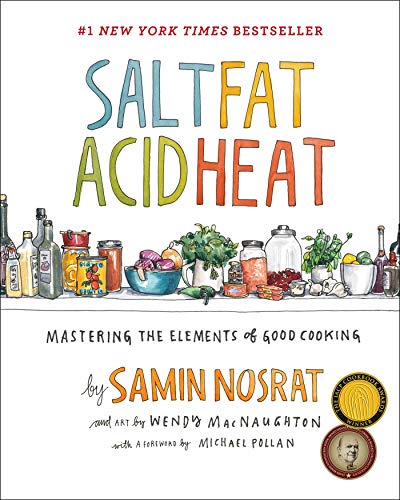
A reference to pairing with contrasting tastes is the James Beard Award winning book Salt Fat Acid Heat by Samin Nosrat.
The first part offers a chapter on each of the four pillars of taste.
It shows how to balance each when incorporating it into a dish.
The second part show specific recipes using the recommended techniques to make each of the elements work to best advantage.
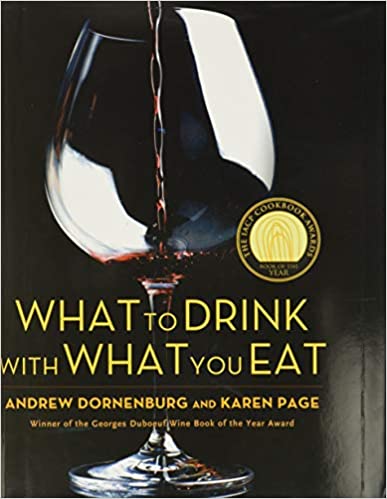
Finally, a book that gives you pairing ideas and the rational for them:
What to Drink with What You Eat by Andrew Dornenburg and Karen Page.
It has two key sections:
1) “What to Drink with what You Eat”. In this section you select a food and it offers a list of beverages that pair well with it.
2) “What to Eat with what You Drink” In this section you select a beverage and it offers a list of foods that pair well with it.
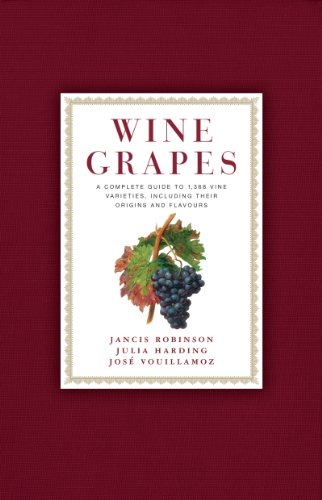
A complete guide to 1,368 vine varieties, including their origins and flavors is a reference book about varieties of wine grapes. The book covers all grape varieties that were known to produce commercial quantities of wine at the time of writing, which meant 1,368 of the known 10,000 varieties
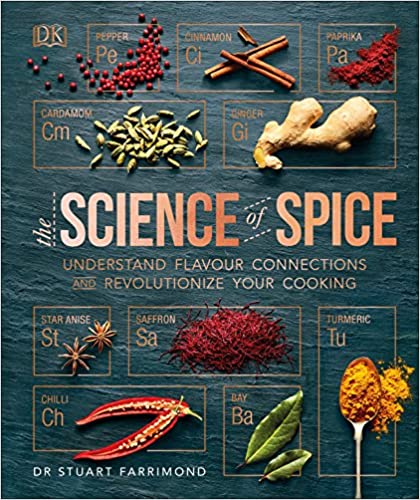
Spices can be used either on a food or in sauces. Food elements can be tied together with sauces. An outstanding book on Spices is the book Spice by Dr. Stuart Farrimond. The author is a M.D. who specializes in food science. His book contains two pages on each spice, identifying the four major aroma compounds and suggesting what foods contain the same compound.
A page for fennel is pictured below. It shows that the dominant aroma is anisole, which is also present in anise and licorice. He selects food partners for each spice.
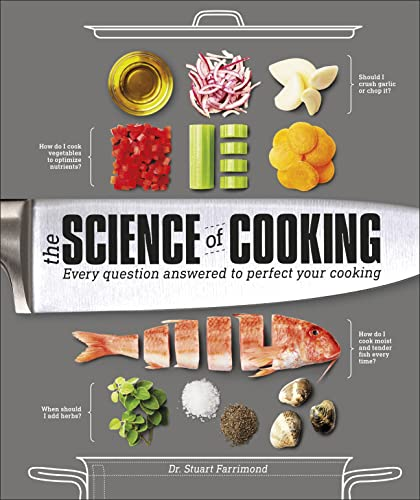
It’s time to bring food science out of the lab and into your kitchen!
Which vegetables should you eat raw? How do you make the perfect poached egg? And should you keep your eggs in the fridge? Why does chocolate taste so good? Is it OK to reheat cooked rice? How do I cook the perfect steak or make succulent fish every time?
TV personality, food scientist and bestselling author, Dr. Stuart Farrimond answers all these questions and more with The Science of Cooking – equipping you with the scientific know-how to take your cooking to new levels.
Explore fundamental culinary concepts, practical advice and step-by-step techniques, to bring food science out of the lab and into your kitchen. Find the answers to your cookery questions and get more out of recipes with intriguing chapters covering all major food types from meat, poultry and seafood, to grains, vegetables, and herbs.
Perfect your cooking with practical instruction and the science behind it, as you explore:
– Step-by-step techniques to demonstrate key concepts in a clear manner
– Illustrations are featured throughout to highlight key culinary processes
– Scientific concepts organized by food group and ingredient
– Question-and-answer format to make science relevant to everyday cooking
A good recipe goes a long way, but if you can master the science behind it, you’ll be one step ahead! The Science of Cooking shows you how by bringing food science out of the lab and into your kitchen, providing you with all the scientific information you need to take your home cooking to a whole new, more nutritious level! From making great risotto and soft ice cream to the process of steaming, this gastronomic cookbook includes step-by-step techniques and striking 3D graphics to bring culinary facts to life.